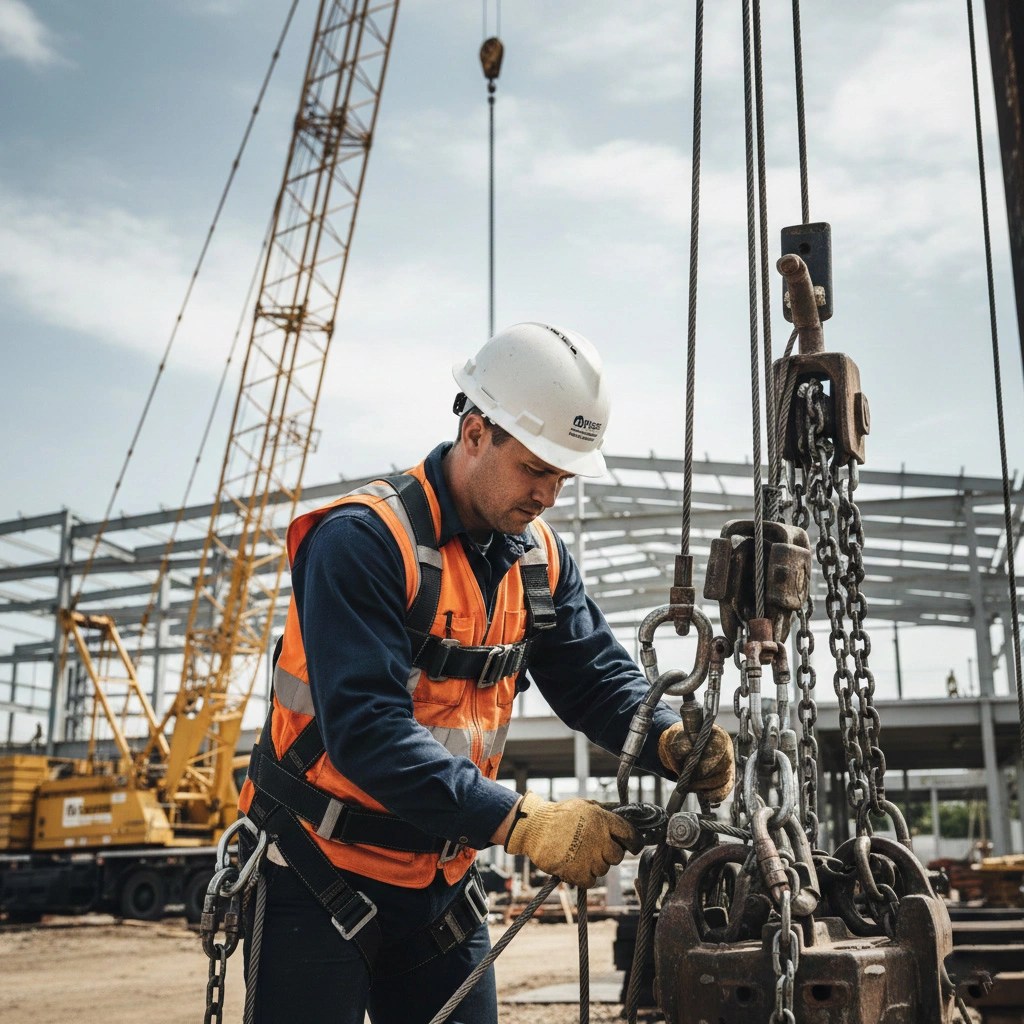
When you hear the term rigger, what does rigger mean in the context of professional work? Simply put, a rigger is a specialized professional responsible for moving and securing heavy, oversized, or awkward objects. Think about those massive steel beams hoisted onto a skyscraper, the elaborate lighting rigs at a concert, or huge machinery repositioned within a factory. Riggers are the experts who plan, execute, and supervise these critical lifting and moving operations, ensuring everything goes off without a hitch and, most importantly, safely.
These pros use an array of specialized equipment like cranes, hoists, pulleys, chains, cables, and shackles to manage formidable loads. Their work demands meticulous planning, keen spatial awareness, and an unwavering commitment to safety, making them indispensable across various industries in the United States. From the bustling construction sites in New York to the sprawling oil fields in Texas, riggers are the unsung heroes who keep complex projects moving forward. Understanding what does rigger mean is key to appreciating the precision and danger inherent in this vital trade.
What Exactly Does a Rigger Do?
A rigger’s day-to-day involves far more than just connecting hooks to heavy stuff. They orchestrate complex lifting and moving operations, often acting like a conductor ensuring every component of a symphony of heavy machinery plays its part perfectly. Before any lift, a rigger assesses the load, calculates its weight and center of gravity, and determines the most stable rigging method. This pre-planning is crucial for preventing accidents and damage.
They select the appropriate rigging equipment, inspect it for wear and tear, and set up the lifting apparatus. During the lift itself, they guide crane operators, communicate via hand signals or radio, and monitor the load's stability. It's a high-stakes job where a single miscalculation can have dire consequences, underscoring the vital nature of what does rigger mean for project success and worker safety.
Whether it’s installing a new air conditioning unit on a high-rise building, setting up an intricate stage for a touring music act, or carefully maneuvering a priceless art installation, riggers are the ones who make these seemingly impossible feats happen. Their expertise ensures that loads are moved efficiently, without harm to personnel or property, which is a big part of what does rigger mean in practice.
Why is Understanding What a Rigger Does So Important?
Ignoring the critical role of a rigger is like trying to build a house without a strong foundation—it’s just asking for trouble. The work of moving colossal and heavy objects carries inherent risks. Without trained riggers, workplaces face a significant uptick in potential accidents, including falling loads, equipment failure, and structural collapses. These incidents can lead to severe injuries, fatalities, and catastrophic property damage.
Furthermore, errors in rigging can translate directly into substantial financial losses. Project delays, equipment repairs or replacement, and potential lawsuits can quickly inflate costs, turning a routine operation into a budget nightmare. A skilled rigger safety approach ensures not just compliance with regulations but also the overall smooth flow and economic viability of a project.
Understanding what does rigger mean highlights the value these professionals bring to safety protocols, operational efficiency, and cost management. Their meticulous planning and execution are paramount for preventing devastating outcomes, making them an essential asset in any industry that deals with heavy lifting.
Ready to Discover Rigging Careers?
What Are the Main Types of Riggers You'll Encounter?
The world of rigging is surprisingly diverse, offering a range of specializations depending on the industry and the nature of the objects being moved. Each type requires specific skills and knowledge, though the core principles of safe load handling remain universal. Knowing these distinctions can help you navigate what does rigger mean in various contexts.
- Construction Rigger: These are the folks you see on towering building sites, hoisting steel, concrete, and heavy machinery into place.
- Stage Rigger: Crucial for the entertainment industry, they set up lights, speakers, and scenery for concerts, theater productions, and film sets.
- Industrial Rigger: Specializing in factories and plants, they move and install large manufacturing equipment and components.
- Oil and Gas Rigger: Work on offshore platforms or onshore facilities, dealing with heavy drilling equipment and structural components.
- Marine Rigger: Focus on maritime operations, securing cargo on ships, maintaining boat rigging, or assisting with shipbuilding.
- Heavy Haul Rigger: Manage the transport of exceptionally large and heavy items over long distances, often requiring specialized trucks and trailers.
Each type of rigger faces unique challenges, from working at extreme heights to navigating confined spaces or coordinating complex lifts in harsh weather. This diversity showcases the broad application of what does rigger mean.
What Responsibilities Come with Being a Rigger?
The responsibilities of a rigger extend beyond simply attaching hooks to loads. Their role begins long before a lift, with detailed planning and assessment. Riggers must have a comprehensive understanding of load dynamics, material strengths, and safety regulations.
Daily tasks for a rigger often include inspecting all rigging equipment for defects, ensuring proper weight distribution, communicating clearly with crane operators and ground personnel, and securing loads to prevent swinging or shifting during movement. They're also responsible for safely dismantling rigging setups after a job is complete. This demands both physical strength and sharp mental acuity.
Essentially, a rigger is a safety gatekeeper and an operational strategist wrapped into one. Their ability to anticipate problems and react quickly is invaluable, embodying the precision and foresight critical to what does rigger mean in practice.
How Do You Actually Become a Rigger?
Becoming a professional rigger requires a blend of formal training, hands-on experience, and specific certifications. It's not a path you typically stumble into; it's a deliberate career choice that values skill and safety above all else. Most riggers start with a high school diploma or GED, followed by specialized rigger training.
Apprenticeship programs are a common and highly recommended route. These programs, often lasting three to four years, combine classroom instruction with extensive on-the-job training under the watchful eye of experienced riggers. This practical experience is crucial for developing the nuanced understanding and muscle memory required for safe and effective rigging.
Key certifications, such as those from the National Commission for the Certification of Crane Operators (NCCCO) or OSHA, are often mandatory in the United States. These certifications validate a rigger's knowledge and skill, proving they meet industry safety standards. Think of it as earning your stripes in a demanding field where expertise truly matters.
| Aspect | Description |
|---|---|
| Education | High school diploma or GED typically required. |
| Apprenticeship | Most common path, 3-4 years combining coursework and practical work. |
| Certifications | NCCCO, OSHA Rigging Certifications (Level I and II), specialized endorsements. |
| Skills Needed | Physical strength, spatial reasoning, problem-solving, communication, attention to detail. |
| Experience | On-the-job hours are critical for advancing and specializing. |
Common Pitfalls and Future Trends in Rigging
What Mistakes Should New Riggers Avoid?
Even seasoned professionals make mistakes, but new riggers are particularly susceptible to common pitfalls. Overlooking safety protocols is perhaps the most dangerous error. Rushing a job, skipping equipment inspections, or failing to communicate clearly can lead to catastrophic accidents. It’s easy to get complacent, but in rigging, complacency can be deadly.
Another frequent mistake is underestimating the weight or instability of a load. Experience helps, but rigorous calculations and double-checks are always necessary. New riggers also sometimes struggle with understanding the nuanced limits of their equipment, pushing it beyond safe operating parameters. Patience, meticulousness, and a healthy respect for physics are non-negotiable for anyone in this line of work.
Learning from experienced mentors and never shying away from asking questions are crucial. The goal isn't just to get the job done, but to get it done right, safely, every single time. This is a core tenet of what does rigger mean.
What Does the Future Hold for Rigging Careers?
The rigging industry is not static; it’s evolving with technological advancements and changing industry demands. Looking ahead, rigging careers will likely see an increased integration of digital tools, such as advanced lifting software for planning and augmented reality for precise placement. Drone technology is already being used for pre-lift site assessments, enhancing safety and efficiency.
There will always be a need for skilled human riggers, but their roles may become more specialized, focusing on complex or highly technical lifts. Continuous training will be essential to keep up with new equipment, materials, and safety standards. The adaptability of riggers to embrace these innovations will define success in the coming years. What does rigger mean in the future? It means being adaptable, tech-savvy, and ever-vigilant.
The demand for experienced riggers remains strong, particularly in booming construction, energy, and entertainment sectors. For those willing to learn and grow with the industry, rigging offers a stable and rewarding long-term career path.
FAQ What Does Rigger Mean
How much does a rigger make?
The average rigger salary in the United States varies significantly based on experience, location, industry, and certifications. Entry-level riggers might start around 40,000 to 50,000 annually, while experienced, certified riggers in high-demand fields like industrial or offshore rigging can command 70,000 to well over 100,000 per year. Specialized skills often lead to higher pay.
What industries employ riggers?
Riggers are essential across a wide array of industries. Key sectors include construction, where they hoist building materials; manufacturing, for moving heavy machinery; oil and gas, for handling large components on platforms; entertainment, for setting up stage equipment; and marine, for cargo handling and boat maintenance. Any industry requiring precise heavy lifting needs riggers.
Is being a rigger dangerous?
Yes, being a rigger involves inherent risks due to working with heavy loads, often at significant heights or in challenging environments. However, strict adherence to safety protocols, extensive training, and proper equipment usage significantly mitigate these dangers. Rigger safety is paramount, with continuous training and equipment checks being standard practice to protect workers.
What certifications are essential for riggers?
Essential certifications for riggers in the U.S. typically include OSHA-mandated training and certifications from the National Commission for the Certification of Crane Operators (NCCCO). NCCCO offers various rigging certifications, such as Rigger Level I and Level II, which validate a rigger's knowledge of load limits, inspection, and safe rigging practices. Specific industries may require additional certifications.
How long does it take to become a certified rigger?
Becoming a fully certified rigger usually involves a multi-year process. After obtaining a high school diploma, aspiring riggers often complete an apprenticeship lasting three to four years, which includes significant on-the-job rigger training and classroom instruction. Obtaining various certifications like NCCCO Rigger Level I and II occurs within or after this apprenticeship period, depending on individual progress.
What types of equipment do riggers use?
Riggers utilize a diverse array of specialized equipment to safely move heavy objects. This includes various types of slings (wire rope, chain, synthetic), shackles, hooks, hoists, pulleys, and specialized lifting beams. They also work closely with cranes of all sizes, forklifts, and other heavy machinery, ensuring all rigging equipment is inspected and rated for the specific load.